
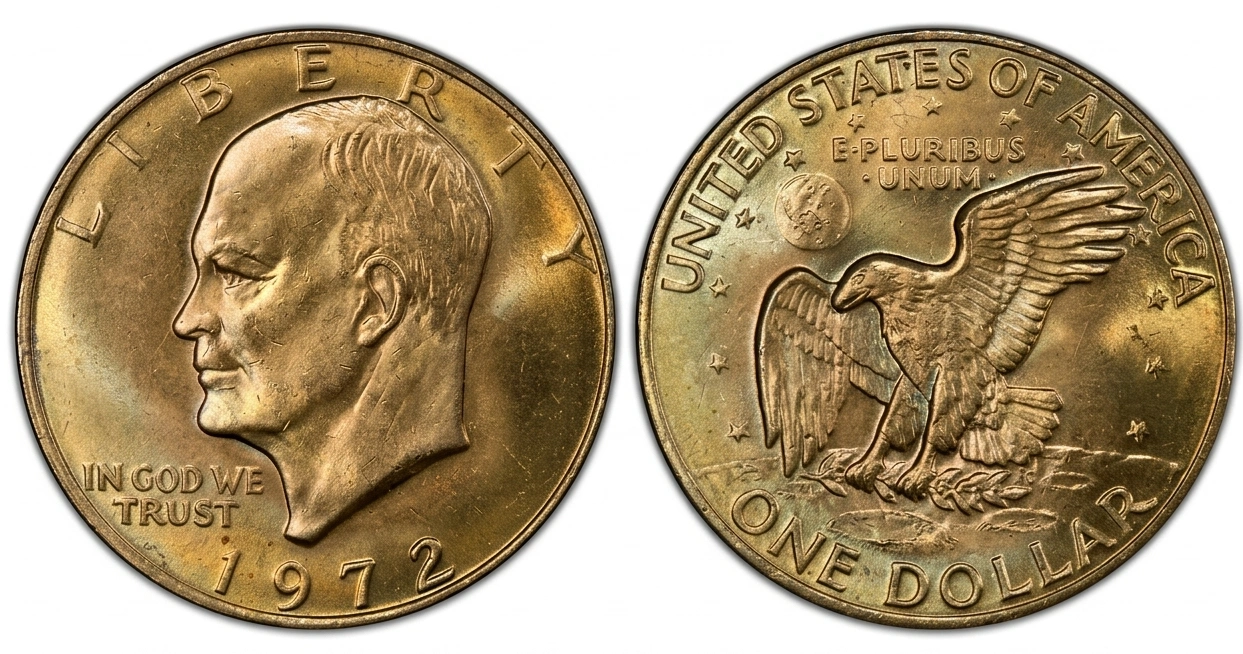
Experienced numismatists often decide a coin’s market potential before even checking the 1972 gold dollar coin value guide.
Metric | Measurement |
Weight | 22.68 grams |
Diameter | 38.1 millimeters |
Thickness | 2.58 millimeters |
Composition | Alloy of copper and nickel bonded to a copper core |
Edge Type | Reeded |
Any alteration of the outer layer changes the total mass of the specimen.
Thin gold plating adds a small but measurable amount of material.
Dealers use sensitive instruments to detect these minor variations.
Detailed Classification of Reverse Die Varieties
During this production run, the Philadelphia minting facility utilized three distinct reverse designs. These variations show subtle changes in the depiction of the Earth above the eagle.
Identifying these varieties helps collectors separate common items from rare varieties.
Reverse Variety Type 1
This design features a flat depiction of the Earth with low relief. Three distinct islands appear to the left of the Florida peninsula.
Most coins from this production run feature this common reverse design.
These pieces carry very little premium on the open market.
Reverse Variety Type 2
This extremely rare variety occurred due to a mistake at the minting facility.
Employees accidentally installed a high-quality die intended only for proof specimens.
The Earth appears round and deeply detailed on this scarce variety.
The islands of the Caribbean Sea appear as a single flat landmass.
The Florida peninsula has a triangular shape on this specific reverse.
The estimated production run for this variety is roughly forty thousand specimens.
Finding an example in excellent condition provides a significant financial return.
Reverse Variety Type 3
This corrected design became the standard for subsequent production runs.
Engravers modified the details of the Earth to improve clarity.
The Caribbean islands appear distinct and occupy their correct positions.
One island lies clearly to the right of the Florida peninsula. This design remains common for coins made after this period.
These pieces trade at a higher value than the first variety.
Distinguishing Gold Plating From Natural Toning
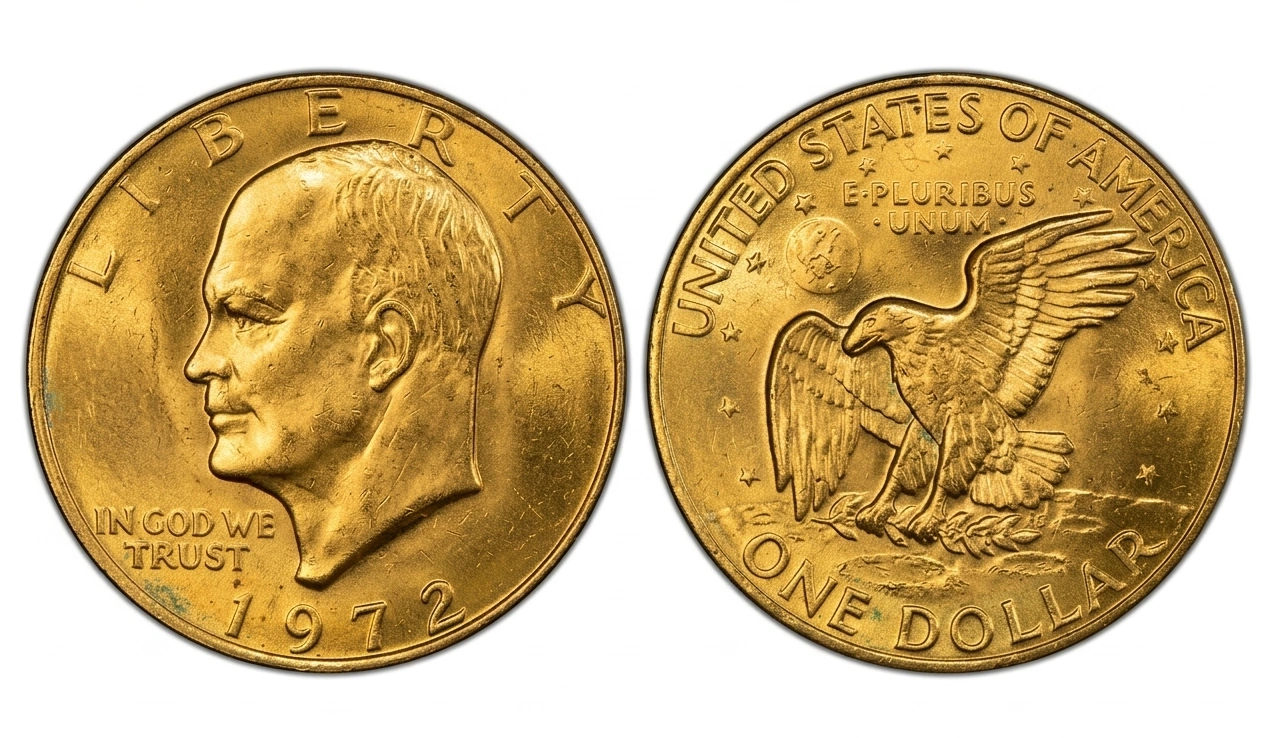
Dealers must determine the origin of the yellow color on the coin. Aftermarket plating occurs through electroplating outside the mint.
This process ruins the numismatic value of the specimen. Natural toning develops through slow interaction with the atmosphere.
Methods for identifying artificial plating:
Inspecting the details
Checking the weight
Evaluating the luster
Artificial plating covers the fine details of the coin with a layer of foreign metal.
This process reduces the sharpness of the lettering and the portrait. Genuine toning does not alter the underlying details of the coin.
Natural oxidation creates a very thin layer on the metal. Toned coins often display colorful bands near the edges.
Characteristics of natural toning:
Smooth color transitions
Visible mint luster
Multicolored appearance
The presence of original mint luster under the color confirms the authenticity of the surface.
Authenticators use a free coin scanner to study the metal surface.
Cleaning or polishing immediately reduces the market value of the item.
Market Value and Price Trends
The price depends heavily on the grade and the variety. Gold-plated novelty pieces have no numismatic value.
Their value rarely exceeds the face value. Rare varieties with natural golden toning show consistent appreciation.
Value changes for rare Type 2 specimens in high grade:
2020 value: $1,800 per piece.
2022 value: $14,400 per piece.
2024 value: $15,870 per piece.
2026 value: $16,500 per piece.
Variety Type | MS63 Value | MS65 Value | MS66 Value |
Type 1 | $15 | $100 | $2,000 |
Type 2 | $110 | $2,500 | $14,400 |
Type 3 | $20 | $120 | $2,200 |
Plated Coin | $5 | $8 | $15 |
The scarcity of Type 2 specimens drives their market value. Demand for certified examples continues to rise.
Professional certification provides a reliable guarantee of authenticity.
Factors Influencing Price Fluctuations
Economic principles govern the numismatic market. Several factors determine the value of rare specimens.
Each factor can be measured and analyzed.
Price change relations:
Better preservation → Higher value
Surface scratches → Lower price
Worn details → Reduced worth
Annual percentage changes in value:
Rare varieties appreciate by approximately twelve percent annually.
Worn gold-plated novelty items depreciate by five percent every year.
Common specimens remain stable with inflation.
The quality of the original planchets affects the final grade. Coins from the Philadelphia facility often show planchet marks.
Finding an undamaged specimen requires significant effort.
Physical Characteristics of the Metal
Understanding the composition helps dealers detect alterations. The copper core gives the coin its standard weight.
The outer layer of copper and nickel provides the silver color.
Golden toning on original coins comes from the oxidation of the copper.
Physical signs of natural toning:
Matte surface texture
Soft light reflection
Even distribution
Exposure to air over time creates a unique coloration on the coin. Proper storage keeps the underlying metal safe from corrosion.
Poor storage conditions lead to ugly dark spots. These spots reduce the appeal and value of the coin.
Storage effects on coin condition:
Damp air → Excessive oxidation
Sealed holders → Preserved luster
Corrosive materials → Destroyed surfaces
Dealers inspect the edge for signs of alterations.
Coins with damaged edges lose up to seventy percent of their value.
Verifying the weight remains the first step in the appraisal.
Professional Appraisal Process
Dealers follow a strict sequence of steps during an evaluation. The process combines visual inspection with instrumental testing.
Specialized equipment helps find hidden defects.
Steps of Professional Authentication
Primary Visual Inspection
The evaluator examines the overall state of the coin without a free coin appraisal app. This step identifies major scratches and signs of circulation.
The dealer immediately rejects obvious counterfeits.
Microscopic Analysis of Details
The examiner uses high magnification to study the design. Special attention is given to the features of the reverse.
This step reveals the rare Type 2 variety.
Spectrographic Composition Analysis
Special devices determine the exact mix of metals in the coin.
This test detects thin layers of gold plating. The presence of foreign metals indicates alteration.
Influence of Professional Grading on Marketability
Certification by major grading services increases the salability of the coin. Coins in sealed plastic holders enjoy the highest trust.
Dealers rely on the opinions of top grading services.
Leading certification organizations:
PCGS
NGC
CAC
Each organization uses the standard grading scale from one to seventy.
The maximum grade represents a perfect coin without flaws.
Value assessment of certified Type 2 specimens:
MS63 value: $110 per piece.
MS64 value: $275 per piece.
MS65 value: $2,500 per piece.
MS66 value: $14,400 per piece.
Certified coins sell much faster than uncertified ones. Buyers pay more for guaranteed authenticity.
Evaluating coins without professional help carries many risks.
Production Problems at the Mint
Die Wear and Degradation
Heavy use reduced the sharpness of the reverse design.
Engravers had to modify the Earth on the working dies.
This necessity explains the existence of multiple varieties.
Planchet Bonding Issues
The outer clad layers sometimes separated from the copper core. These errors make the coins desirable to collectors.
The value of these error coins exceeds their nominal face value.
Variations in Alloy Mix
Small changes in the nickel content altered the color of the coins. Some coins had a yellowish look right from the start.
Dealers distinguish these mint errors from aftermarket plating.
Investment Strategy and Outlook
Investing in rare coin varieties requires specialized knowledge. Buying common gold-plated dollars does not bring financial gains.
Successful buyers focus on certified rare varieties.
Portfolio recommendations:
Choose rare varieties
Buy high grades
Monitor auction records
Buying from major auction houses reduces the risk of fraud.
Dealers track major sales to understand price trends.
Rare coin values remain stable during economic downturns.
Safe Transaction Practices
High-value transactions require careful planning.
Buyers should avoid purchasing rare coins from unverified sources.
An official grading certificate is essential for high-value sales.
Buyer checklist:
Verify serial numbers
Check holder integrity
Compare dealer prices
Following these rules protects your capital from loss. The coin market offers great opportunities for long-term growth.
Selecting the right coin ensures the safety of your investment.